
Why Is My Copper Bottle Turning Green Inside? Is It Safe?
Your copper bottle turning green is a natural chemical process called oxidation - the same thing that turns the Statue of Liberty green. On the exterior of a copper bottle, this patina is beautiful and desirable. On the interior, a light patina is generally harmless but should be cleaned away regularly with the lemon-salt method.
Here's exactly what's happening, when it's fine, when to be concerned, and how to keep your bottle in perfect condition.

What Is the Green Colour? (It Has a Name)
The green you're seeing is called verdigris (from French: vert-de-gris, "green of grey"). Chemically, it's a mixture of copper carbonate, copper hydroxide, and copper acetate — compounds formed when copper reacts with:
- Oxygen and water → copper oxide (dark brown/reddish first, then darker)
- Carbon dioxide in air → copper carbonate (the green layer)
- Acidic substances → copper acetate (forms faster with any acids)
This is the same chemical process that turned the Statue of Liberty from shiny copper to its famous blue-green patina over about 25 years. On ancient copper artifacts, patina is a sign of authenticity and age. On your water bottle, it's a sign you have real copper.
Is It Safe to Drink from a Green Copper Bottle?
A light, natural patina on the interior is generally not dangerous, but it should be cleaned away regularly for two important reasons:
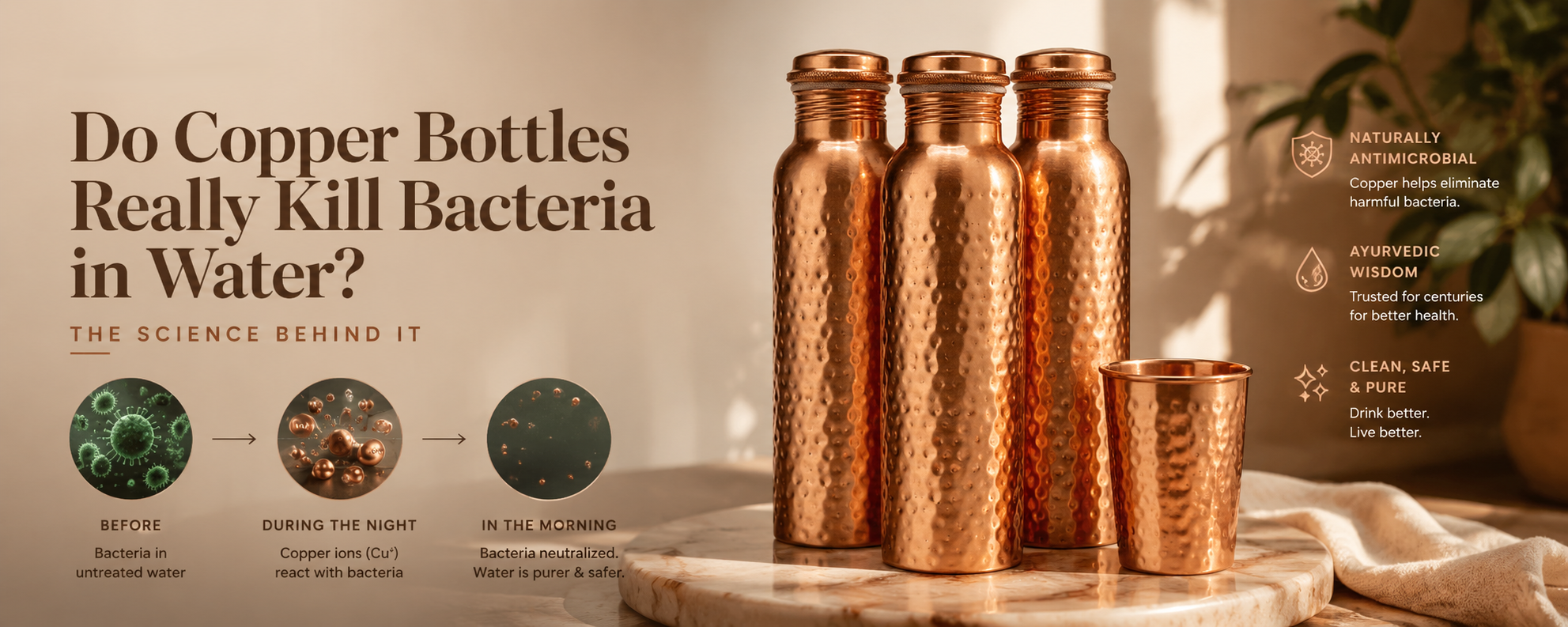
- It reduces antimicrobial effectiveness - patina buildup creates a barrier between the water and the raw copper surface, reducing the rate of copper ion exchange that makes copper water antimicrobial
- It can affect taste - heavy patina can give water an earthy, metallic taste that most people find unpleasant
Heavy verdigris deposits - thick, crusty, bright green build-up — should definitely be cleaned away before using the bottle. This level of buildup typically indicates the bottle hasn't been cleaned in months, or that acidic liquids have been stored repeatedly.
The bottom line: Light patina on the interior = clean it weekly and you're fine. Heavy green crusty deposits = clean it thoroughly before using again. Either way, the solution is the same: the lemon-salt cleaning method.
Why Does Patina Form Faster in Some Bottles?
Several factors speed up the greening process:
1. Leaving water in the bottle too long
Water left sitting for 24+ hours reacts with the copper surface continuously. The longer it sits, the faster oxidation progresses. Empty and rinse your bottle daily.
2. Storing acidic liquids
Lemon juice, juice, vinegar drinks, or sparkling water all accelerate patina formation dramatically. These substances react with copper rapidly. Stick to plain, still water for overnight storage.
3. Hard water (high mineral content)
Hard tap water with high calcium and magnesium content deposits mineral scale on the copper surface, which can accelerate oxidation underneath. If you live in a hard water area, clean your bottle more frequently.
4. Not drying properly
Sealing a wet bottle traps moisture inside. The combination of moisture and oxygen in the trapped air creates ideal conditions for rapid oxidation. Always air dry with the cap off.
5. New bottles
A brand-new copper bottle often shows some oxidation within the first few uses as the interior surface is "breaking in." This is normal and settles down after a few cleaning cycles.
How to Remove the Green Patina: Step-by-Step
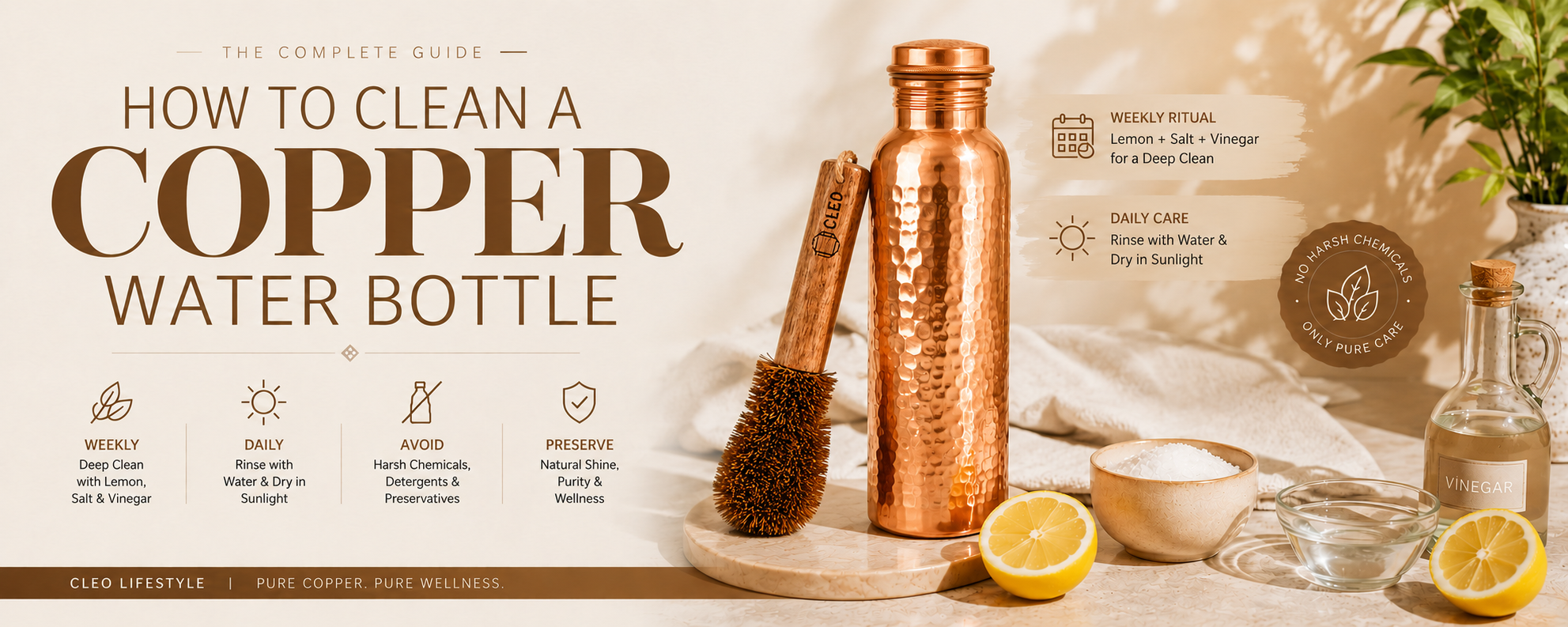
The lemon and salt method - simple, natural, effective.
What you need:
- Half a lemon (or 2 tbsp lemon juice)
- 1 teaspoon coarse sea salt
- Warm water
- Soft bottle brush
For light patina (regular weekly clean):
- Squeeze lemon juice into the bottle, add salt
- Shake vigorously for 60 seconds
- Let it sit for 10 minutes
- Scrub gently with a bottle brush
- Rinse thoroughly with warm water several times
- Air dry with cap off
For heavy green deposits:
- Fill the bottle halfway with a 50:50 mix of white vinegar and warm water
- Add 1 tablespoon of coarse salt
- Seal and shake well
- Leave for 2–4 hours (or overnight for very heavy deposits)
- Scrub thoroughly with bottle brush, paying attention to the bottom and neck
- Rinse with warm water 4–5 times until completely clean
- Follow with one round of the lemon-salt method
- Rinse again, then air dry completely
After a thorough clean, your bottle interior should be back to the warm, bright copper tone.
How to Prevent the Green Patina
You can't completely prevent patina - it's the nature of copper. But you can slow it down significantly:
| Habit | Effect |
|---|---|
| Clean weekly with lemon + salt | Removes patina before it builds up |
| Only store plain, still water | Prevents acid-accelerated oxidation |
| Empty and rinse daily | Stops stale water from oxidising the surface |
| Air dry with the cap off | Prevents moisture from being trapped |
| Don't leave water in for 24+ hours | Slows continuous surface reaction |
What About the Outside of the Bottle Turning Green?
This is a different situation - and one many copper enthusiasts actively embrace.
The exterior patina on a copper bottle is considered beautiful, especially on hand-hammered artisanal pieces like Cleo bottles. Ancient copper artifacts, architectural copper (like the Statue of Liberty), and traditional Ayurvedic copper vessels all develop their character through patina. The exterior greening is purely aesthetic and poses zero health concern.
If you prefer to maintain the original warm copper glow on the exterior: polish monthly with the lemon-salt method on a cloth, buff, and rinse.
If you love the patina look: do nothing. Let it develop naturally. Each bottle will age uniquely based on your environment, water mineral content, and use patterns. No two patinas are identical.
The Green Patina on the Outside Is Actually Protective
Interestingly, copper patina (the outer layer of copper carbonate) is slightly protective. It's a more stable compound than bare copper and acts as a barrier against further corrosion. This is why copper roofing that has developed a full patina lasts for centuries.
So while you should keep the interior clean for functional reasons, letting the exterior develop its patina is genuinely a good thing for the bottle's longevity.
FAQ - Copper Bottle Turning Green Inside?
Q: Is it safe to drink water from a green copper bottle?
A: A light interior patina is generally not harmful at the trace levels present in normal copper water. However, you should clean the interior regularly - heavy deposits can affect taste and reduce the bottle's antimicrobial effectiveness. Clean with lemon and salt weekly.
Q: Why did my new copper bottle turn green so quickly?
A: New copper bottles often show oxidation quickly because the fresh copper surface is highly reactive. This is normal and settles down once the surface "seasons" through a few use-and-clean cycles. Make sure you're doing the initial seasoning process correctly.
Q: Will the green colour affect the taste of my water?
A: Light patina usually doesn't noticeably affect taste. Heavy deposits can impart an earthy or metallic quality to the water. If you notice a stronger-than-usual taste, it's time for a thorough clean.
Q: Can I use the bottle if I see green spots on the outside?
A: Yes. Exterior patina is purely cosmetic and poses no health concern. Whether to remove it or embrace it is entirely a personal aesthetic choice.
Q: My copper bottle has a white deposit at the bottom, not green - what is that?
A: White deposits are typically mineral scale from hard water (calcium and magnesium carbonates), not copper oxidation. Clean with the vinegar-water solution (vinegar dissolves mineral scale well) then follow with lemon-salt.
Sources
*For full cleaning instructions, see our copper bottle cleaning guide. New to copper? Read our first-use seasoning guide for the best start.*