
What Should You Never Put in a Copper Water Bottle?
If you just unboxed a shiny new copper bottle, congratulations, and pause before you fill it. Knowing what to never put in a copper water bottle is the single most important thing that separates a bottle that lasts for decades from one that turns green, pitted, or unsafe within weeks. Copper is a reactive metal, which means it responds to acidity, salt, and certain liquids in ways plastic or stainless steel simply don't. The good news? Once you know the short list of things to avoid, using your copper bottle becomes second nature.
In this guide, we're breaking down exactly what to never put in a copper water bottle, the science behind why it matters, and the copper bottle do's and don'ts that will keep your bottle, and you, safe for years to come.

Why Copper Reacts the Way It Does
Copper is a naturally occurring, chemically active metal. Unlike stainless steel, which is engineered to resist corrosion, copper actively interacts with its environment. When copper meets an acidic or salty liquid, a chemical reaction called oxidation occurs. This is the same reaction that turns a shiny penny green over time.
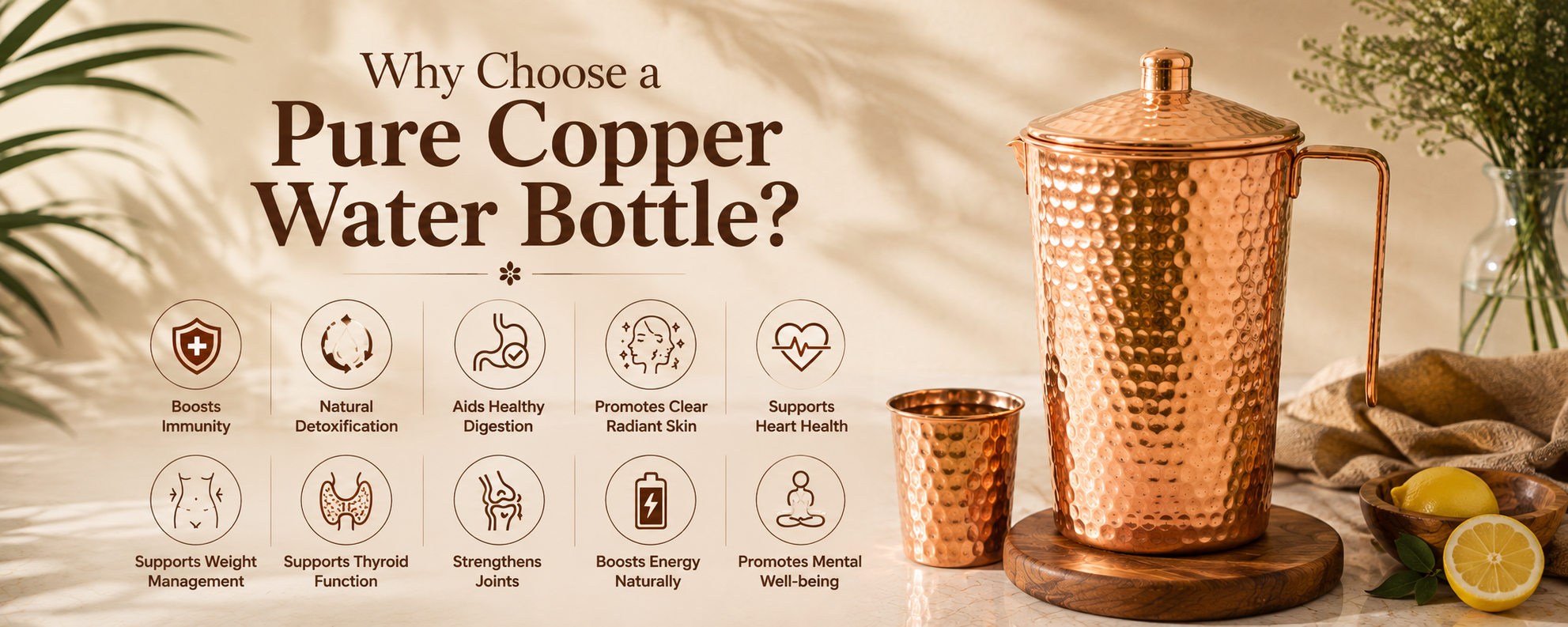
In small, controlled amounts, like storing plain drinking water overnight, this reaction is part of what people have traditionally valued about copper vessels for generations. Ayurvedic practice has long held copper-stored water in high regard as part of a daily wellness ritual. But when copper comes into contact with the wrong liquids, that same reactivity can produce unwanted flavors, bottle discoloration, and compounds you don't want to consume regularly.
This is exactly why understanding what to never put in a copper water bottle matters so much it's not about being overly cautious, it's about knowing where the line is.
Handcrafted Copper Water Bottle

What to Never Put in a Copper Water Bottle: The Full List
Here's the definitive list of what to never put in a copper water bottle, along with the reasoning behind each one.
1. Lemon or Citrus Water
Citrus fruits are highly acidic, and acid is copper's biggest trigger. Lemon, lime, orange, or grapefruit water sitting in a copper bottle for any length of time accelerates oxidation dramatically, giving the water a metallic taste and turning the interior of your bottle green or dark.
2. Fruit and Vegetable Juices
Juices, even "healthy" ones like apple or beet juice, contain natural sugars and acids that react with copper much faster than plain water does. Beyond the taste change, the sugar residue can also encourage bacterial growth if left sitting.
3. Carbonated Drinks and Soda
Carbonation introduces carbonic acid, and most sodas add citric or phosphoric acid on top of that. This combination is one of the fastest ways to corrode a copper interior and should never go anywhere near your bottle.
4. Milk and Dairy-Based Drinks
Dairy proteins spoil quickly at room temperature, and copper bottles aren't designed for refrigeration or insulation the way a dedicated thermos is. Milk left in copper also reacts with trace copper ions, which can affect both taste and freshness.
5. Alcohol
Alcoholic beverages, especially wine, beer, and mixed cocktails, are often acidic or contain sulfites that react with copper. Traditional copper mugs used for cocktails like a Moscow Mule are typically lined with a protective layer of nickel or stainless steel on the inside for exactly this reason — a pure, unlined copper bottle is not built for the same use.
6. Vinegar or Vinegar-Based Drinks
Apple cider vinegar tonics have become a popular wellness trend, but vinegar is one of the most acidic liquids you can put in a copper vessel. It will corrode the interior surface quickly and is one of the clearest answers to what to never put in a copper water bottle.
7. Salted Water or Electrolyte Mixes
Salt is highly corrosive to metal, copper included. Electrolyte powders, rehydration salts, and any salted beverages should be kept far away from your copper bottle to prevent pitting and premature wear.
8. Medications or Supplements Dissolved in Water
Dissolving tablets, powders, or supplements directly in your copper bottle isn't recommended. Many formulations contain acids or reactive compounds that weren't designed with copper storage in mind, and the interaction can alter both the medication and the bottle.
9. Essential Oils or Flavor Drops
Essential oils and concentrated flavor additives are often acidic or oil-based, neither of which plays well with copper. They can leave residue that's difficult to clean and may react with the metal surface over time.
10. Hot Liquids Like Tea or Coffee
While copper handles room-temperature and cool water beautifully, prolonged exposure to hot liquids like tea or coffee accelerates oxidation and can also make the bottle uncomfortably hot to hold. Copper bottles are best reserved for cool or room-temperature water rather than hot beverages.
Can You Put Lemon Water in a Copper Bottle?
No, lemon water should not be stored in a copper bottle. Lemon is highly acidic, and that acidity reacts with the copper surface far more aggressively than plain water does. Even a small amount of lemon juice can cause visible discoloration, an unpleasant metallic taste, and faster wear on the interior of your bottle. If you enjoy lemon water as part of your routine, prepare it fresh in a glass or stainless-steel container instead, and save your copper bottle for plain filtered water.
Can You Put Juice in a Copper Bottle?
No, juice should never be stored in a copper bottle. Fruit and vegetable juices combine natural acidity with sugar content, which together speed up oxidation and create an environment where bacteria can multiply more easily. This applies to fresh-pressed juice, packaged juice, and juice concentrates alike. For juice, stick to a dedicated glass bottle or your original packaging, and reserve your copper bottle exclusively for water.
Copper Bottle Do's and Don'ts
To make things simple, here's a quick-reference breakdown of copper bottle do's and don'ts you can bookmark.
Do:
-
Fill your bottle with plain, filtered drinking water
-
Let water sit for a few hours (many people follow a traditional overnight practice) before drinking
-
Hand wash with a mild solution and dry thoroughly after each use
-
Store your bottle in a cool, dry place
-
Choose a lab-tested, 100% pure copper bottle from a trusted source
Don't:
-
Add lemon, citrus, or any acidic fruit to the water
-
Pour in juice, soda, milk, alcohol, or vinegar-based drinks
-
Add salt, electrolyte powders, or dissolved supplements
-
Use hot water or hot beverages like tea and coffee
-
Put your copper bottle in the dishwasher or microwave
Common Copper Water Bottle Mistakes to Avoid
Beyond the liquids themselves, there are a few everyday copper water bottle mistakes worth watching for:
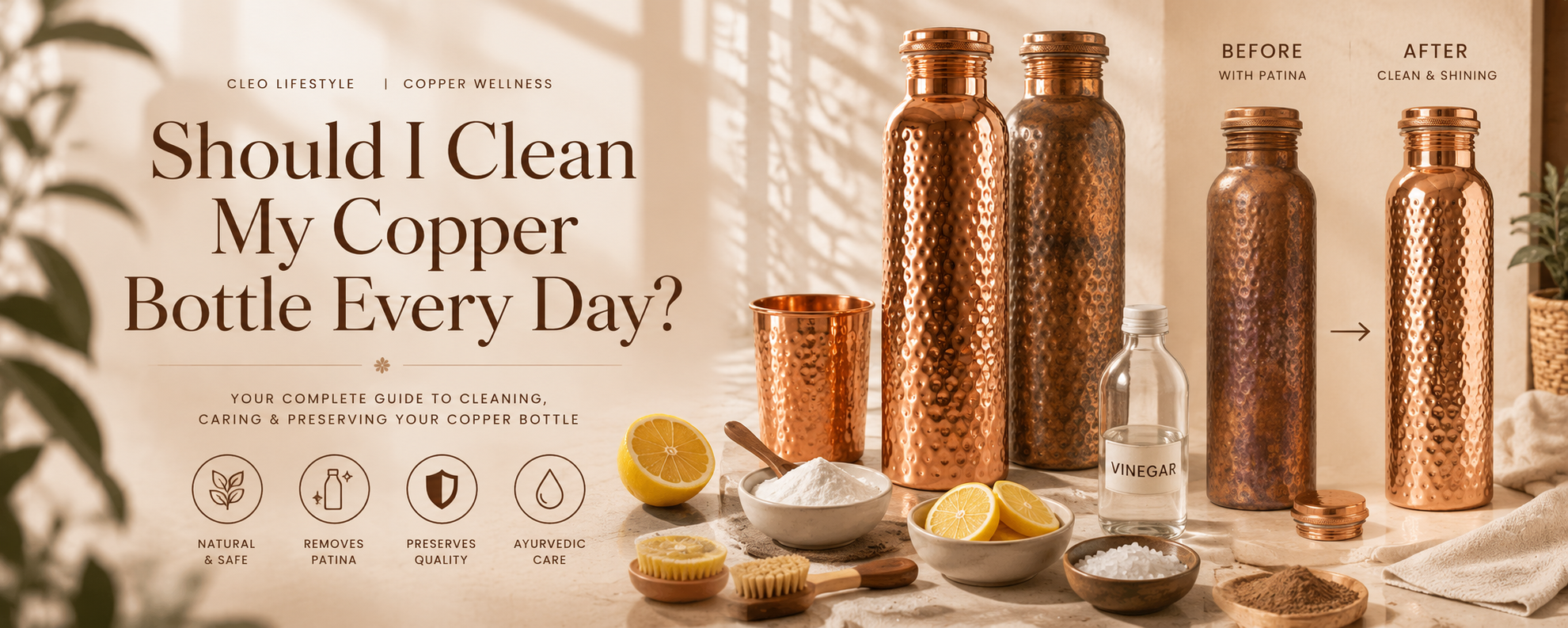
Skipping regular cleaning. Copper needs consistent, gentle cleaning to maintain its protective patina and prevent buildup. Going too long without washing is one of the most common copper water bottle mistakes people make.
Using harsh chemical cleaners. Dish soap with strong chemicals, bleach, or abrasive scrubbers can strip copper's natural surface. A natural cleaning solution, like a mix of salt and something mildly acidic used briefly and rinsed thoroughly, is a gentler approach specifically for cleaning, not for storing drinks.
Ignoring the patina. A darker, matte tone developing on the outside of your bottle over time is a completely normal part of copper aging, not a defect. Polishing it away too often can actually wear down the metal faster.
Leaving water in for too long. While copper-stored water is traditionally consumed within a reasonable window (commonly overnight or up to about 8 hours), leaving water sitting for multiple days isn't recommended.
Buying uncertified copper. Not all copper bottles are created equal. Bottles that aren't verified as 100% pure, food-grade copper may contain alloy blends that behave unpredictably and aren't intended for drinking water storage.
How to Safely Use Your Copper Water Bottle
Now that you know what to never put in a copper water bottle, here's how to get the most out of it the right way:
-
Start with plain water only. This is the golden rule of copper bottle ownership.
-
Rinse before first use. A quick rinse removes any manufacturing residue before the bottle's first fill.
-
Follow a consistent routine. Many people fill their bottle before bed and drink from it in the morning as part of an Ayurvedic-inspired wellness ritual.
-
Clean by hand, every time. A soft cloth and mild solution keep both the interior and exterior in good condition.
-
Air dry completely. Trapped moisture is one of the fastest ways to encourage unwanted oxidation.
-
Store away from other reactive metals. Keeping your copper bottle away from silver or other metals during storage helps preserve its finish.
Signs Your Copper Water Bottle Has Reacted Badly
If you're wondering whether your bottle has already been exposed to something on the "never" list, watch for these signs:
-
A bright green or blue-green residue on the interior surface
-
A strong metallic or sour smell coming from the bottle
-
Water that tastes noticeably different or unpleasant
-
Pitting, rough patches, or discoloration that won't clean off
-
A sticky or oily film left behind after emptying the bottle
If you notice any of these, discard the liquid, wash the bottle thoroughly with a gentle cleaning solution, and going forward, stick strictly to plain water.
FAQ - Copper Water Bottle Mistakes
What should you never put in a copper water bottle?
You should never put lemon or citrus water, fruit juice, soda, milk, alcohol, vinegar, salted or electrolyte water, dissolved medications, essential oils, or hot beverages in a copper water bottle. Copper reacts with acidic, sugary, salty, and hot liquids, which can affect both the metal and the safety of what you're drinking.
Can you put lemon water in a copper bottle?
No. Lemon water is too acidic for copper storage and will cause faster oxidation, a metallic taste, and visible discoloration. Prepare lemon water in a glass or stainless-steel container instead.
Can you put juice in a copper bottle?
No. Juice combines acidity with natural sugars, which reacts with copper and can also promote bacterial growth. Copper bottles are best reserved exclusively for plain drinking water.
What are the most common copper water bottle mistakes?
The most common copper water bottle mistakes include storing acidic drinks like citrus water or juice, skipping regular cleaning, using harsh chemical cleaners, leaving water in the bottle for multiple days, and buying uncertified, non-food-grade copper.
Is it safe to drink water stored overnight in a copper bottle?
Yes, plain water stored in a 100% pure, food-grade copper bottle overnight is a practice many people follow as part of a traditional Ayurvedic wellness routine. As with any wellness practice, it's a good idea to check with a healthcare provider if you have specific health concerns.
How do I know if my copper bottle is food-grade?
Look for a bottle that's explicitly labeled as 100% pure, food-grade, lab-tested copper from a transparent, reputable brand. Avoid bottles that don't disclose their copper purity or that mix in other metals without stating so clearly.
Knowing what to never put in a copper water bottle really comes down to one simple principle: copper and plain water are a perfect match, and almost everything else is not. Avoid acidic, sugary, salty, carbonated, or hot liquids, stick to a gentle cleaning routine, and your handcrafted copper bottle can genuinely last a lifetime with proper care.
At Cleo Lifestyle, every copper water bottle is handcrafted from 100% pure, lab-tested copper so you can build a daily water ritual with confidence, knowing exactly what's safe to fill it with.