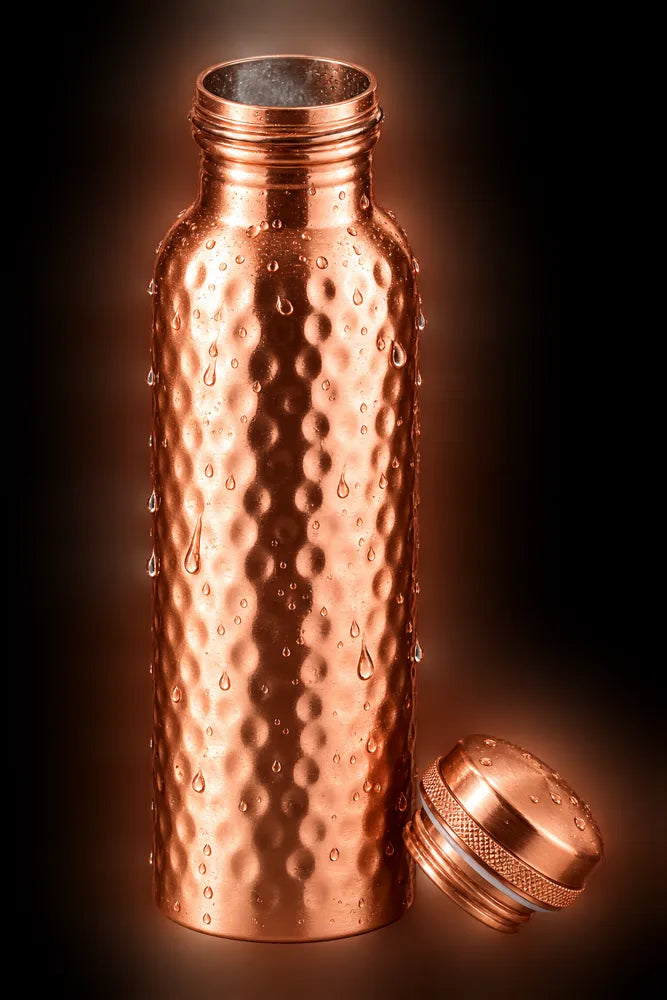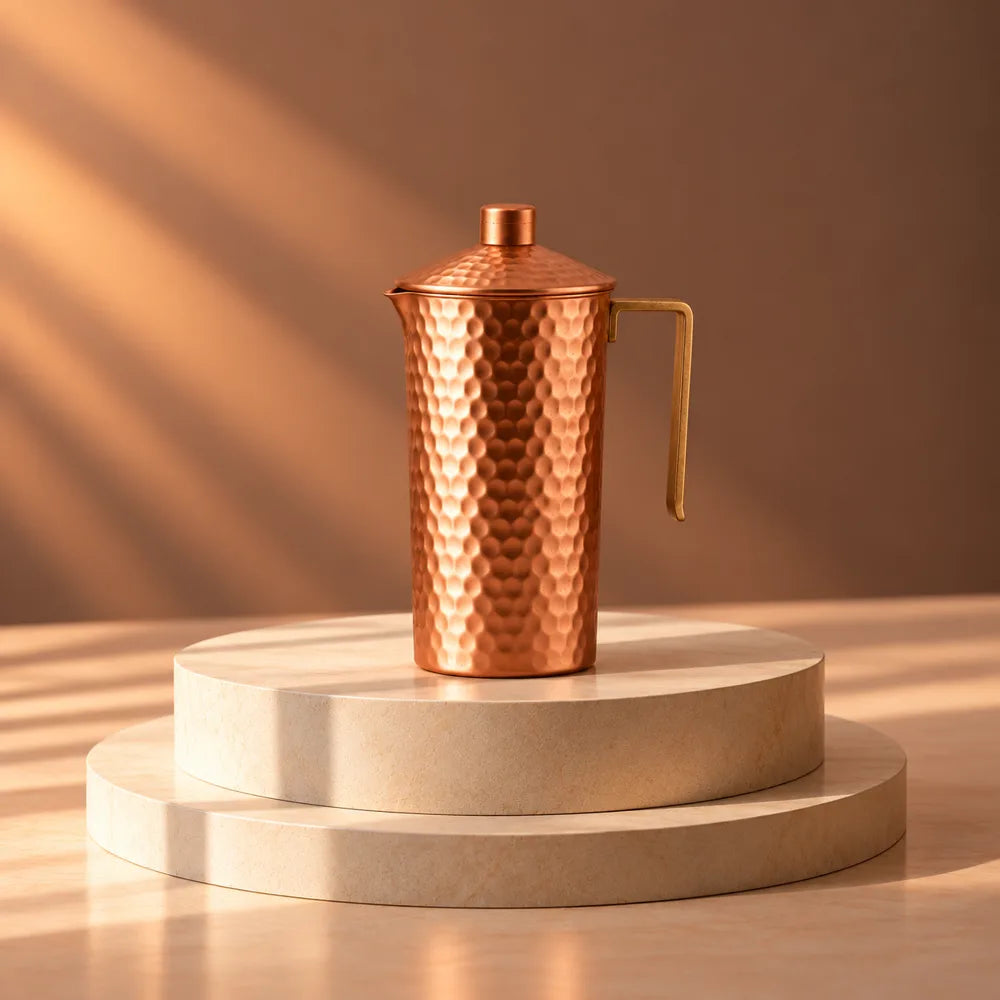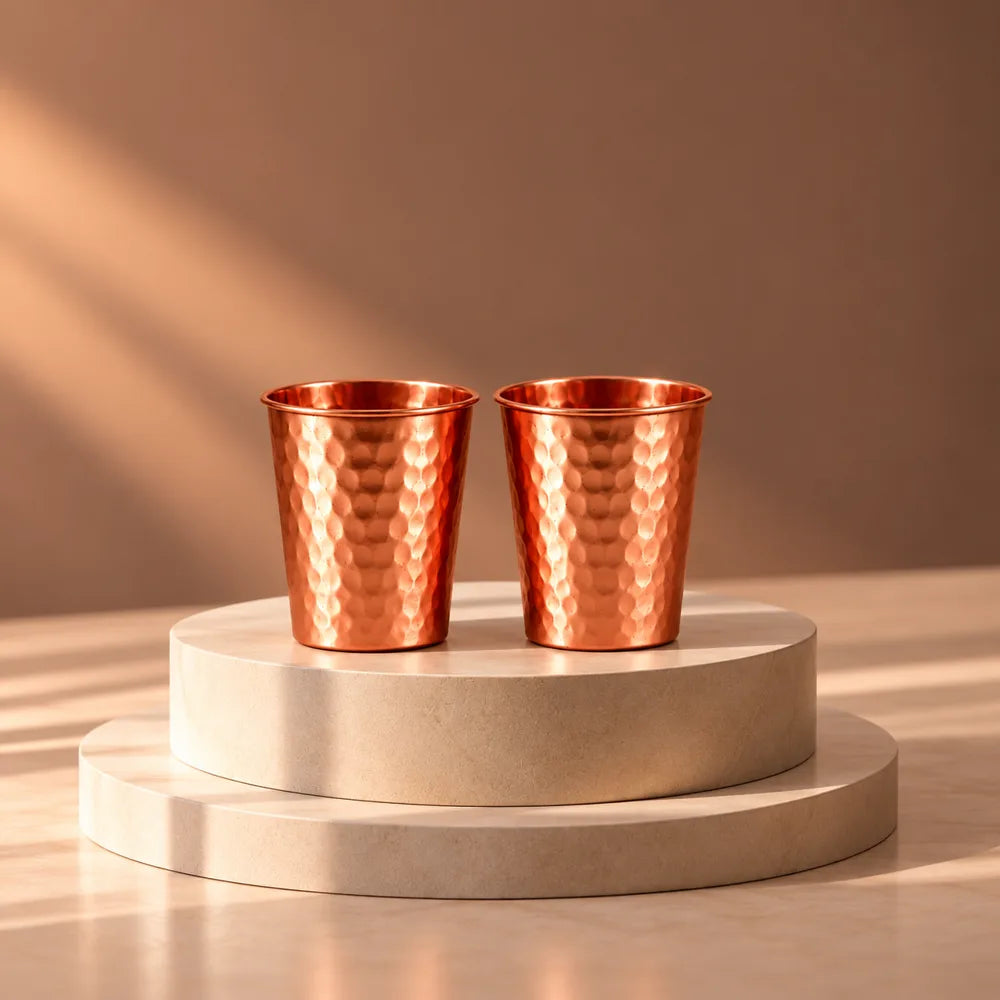

Copper has been used for drinkware for centuries, valued for its warm look, durability and its place in traditional Ayurvedic practice. A pure copper water bottle is a natural material, so it rewards gentle, chemical-free care. This guide covers the daily routine, the weekly clean and how to look after the outside finish.
You can drink fresh water from your bottle at any time, but the traditional routine uses an overnight rest. Here is how most people do it.

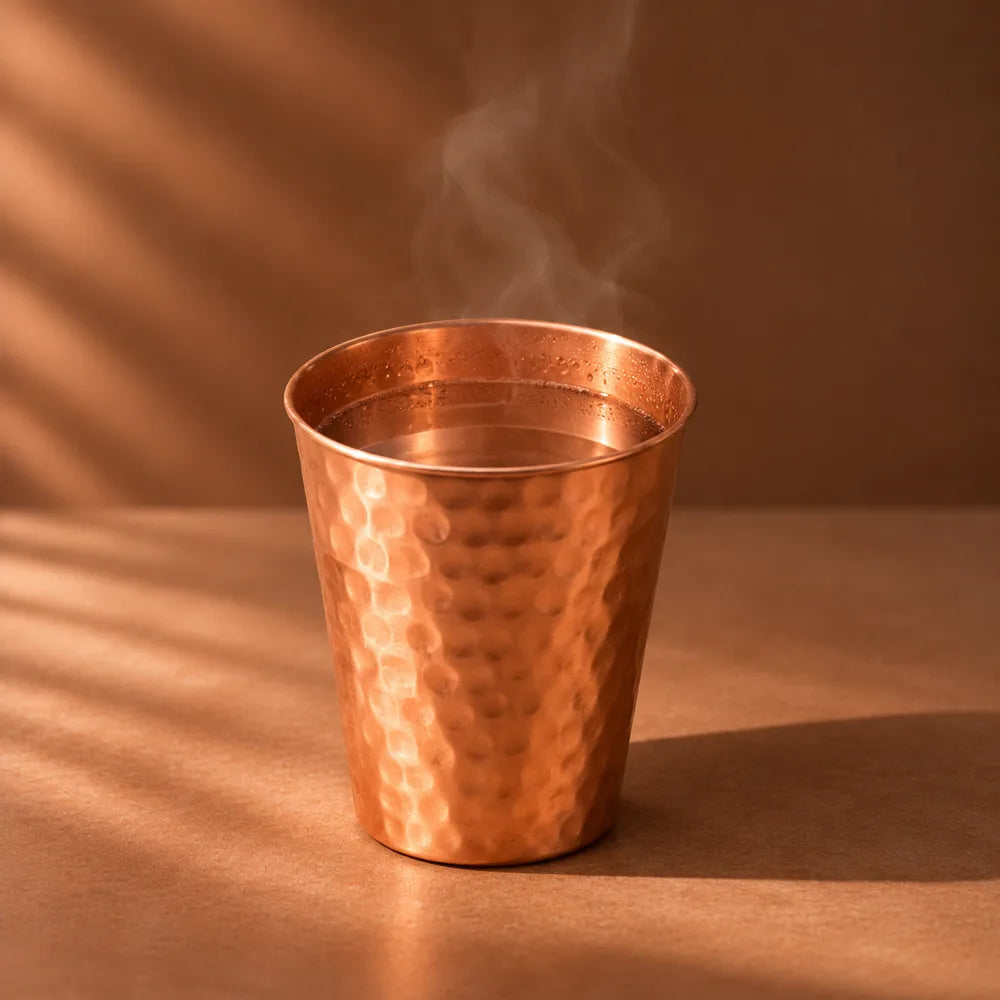
Fill the bottle with fresh, plain water and leave it for at least 6 to 8 hours. Overnight is ideal, and it gives the water its mild metallic note.

Start your day with a cup of the rested water on an empty stomach, as the Ayurvedic tradition recommends.

Finish the rest across the day. Around 1 litre of copper-rested water daily is a sensible target.
Clean the inside about once a week to prevent mineral and copper build-up. You only need three pantry items: lemon or white vinegar, salt and warm water.

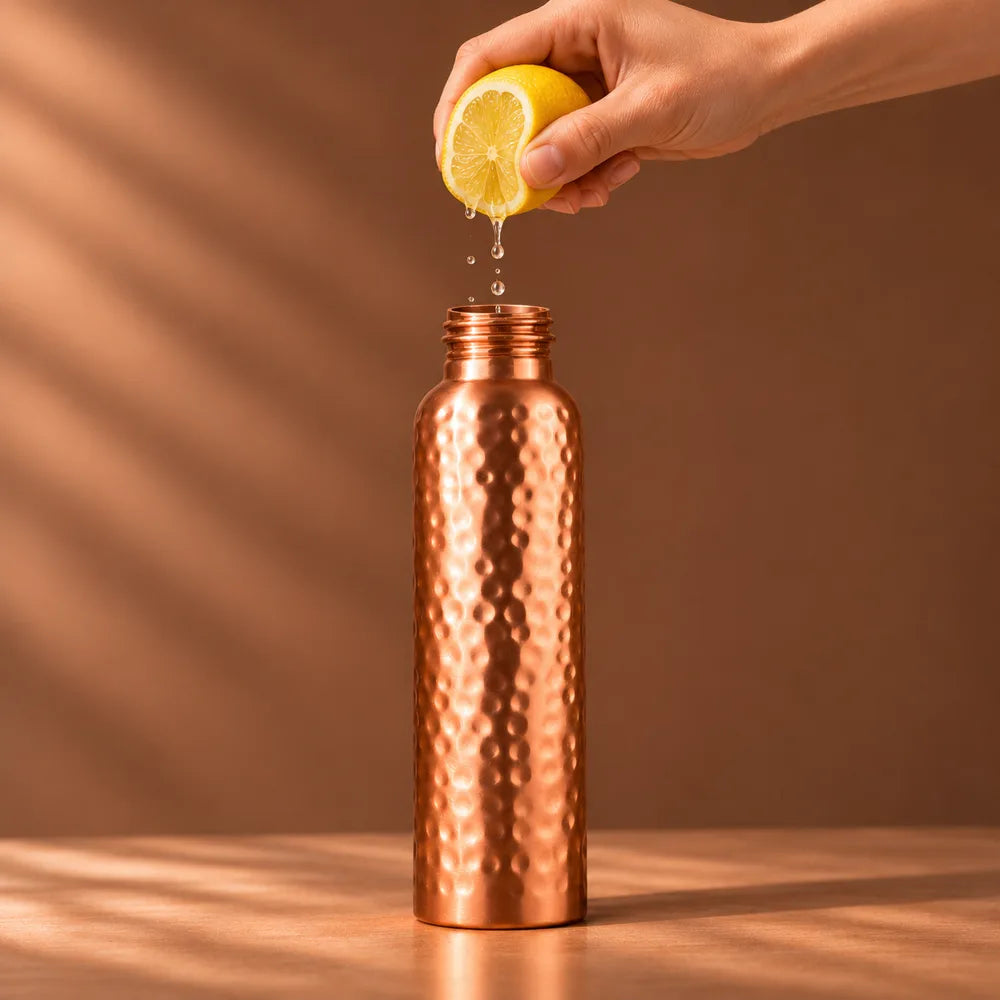
Squeeze in half a fresh lemon, or pour in ¼ cup of naturally fermented white vinegar.
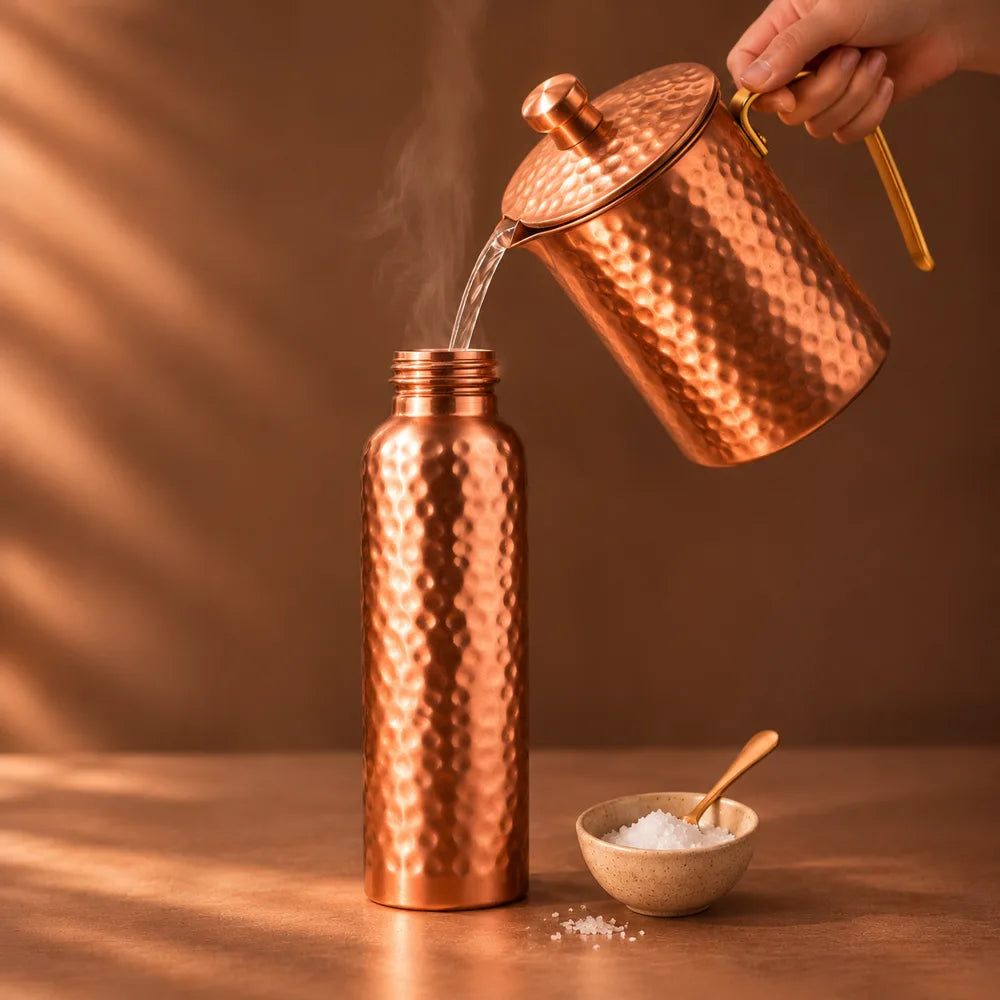
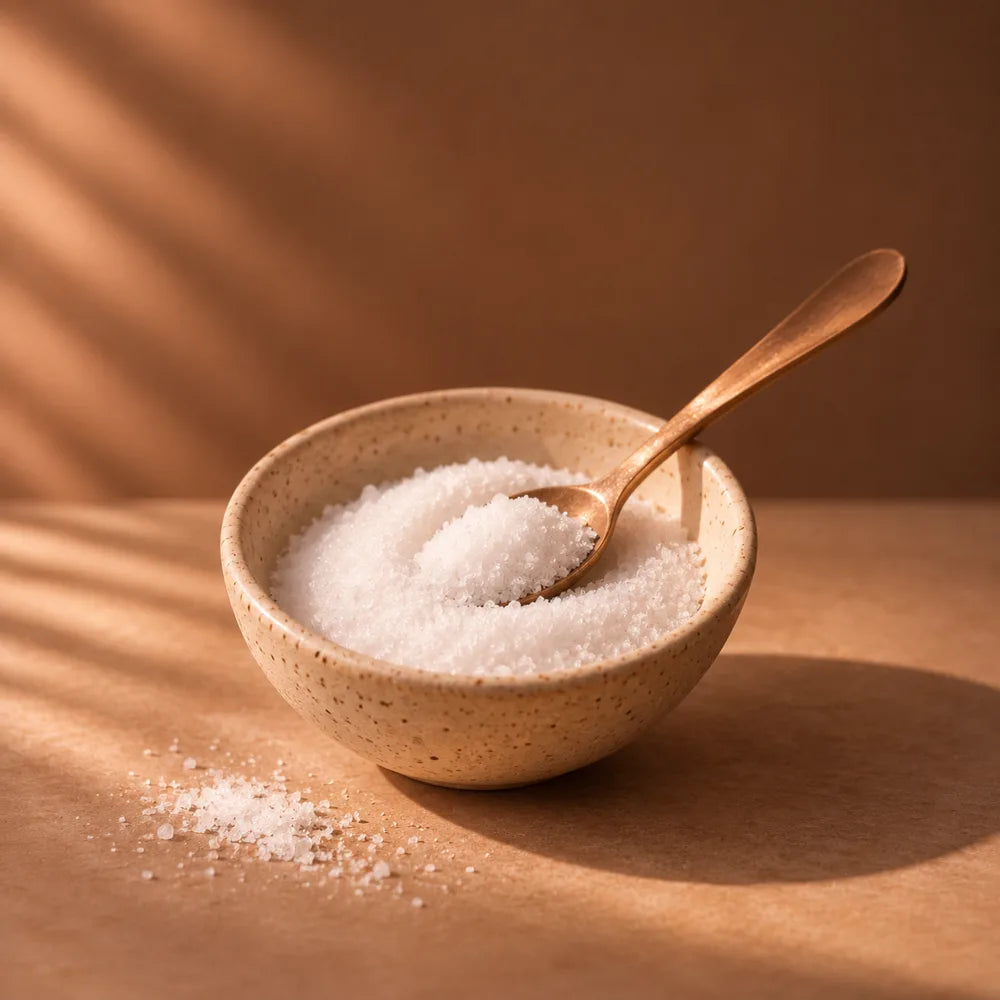
Add 1 tablespoon of salt, then pour in 1 to 2 cups of warm water.

Secure the cap and shake vigorously until the salt dissolves.
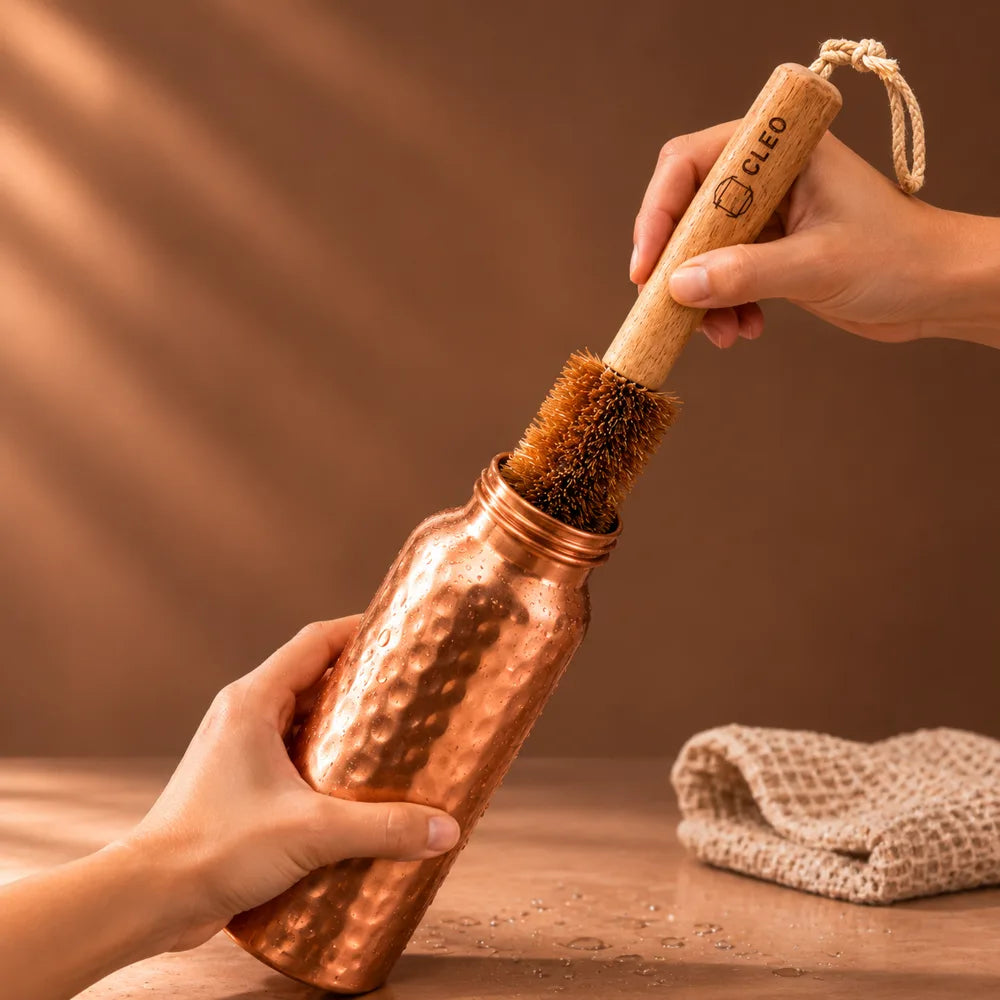
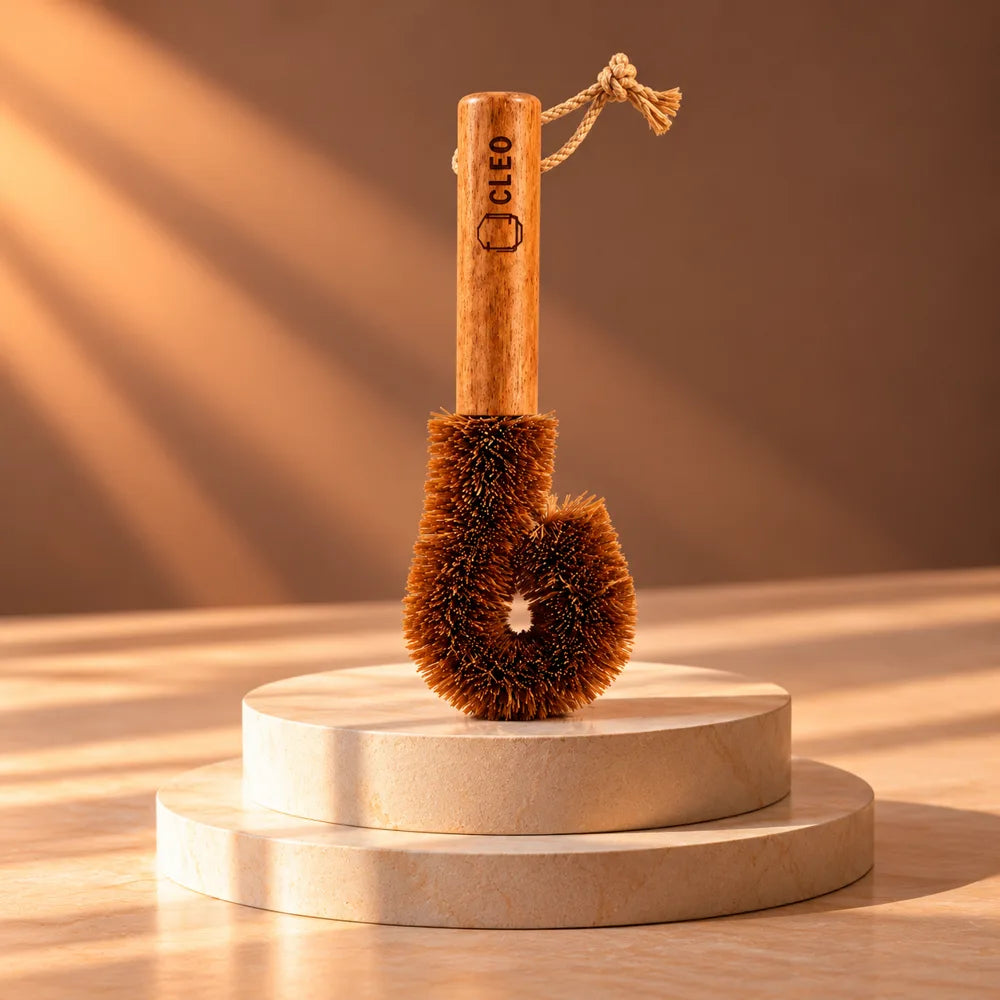
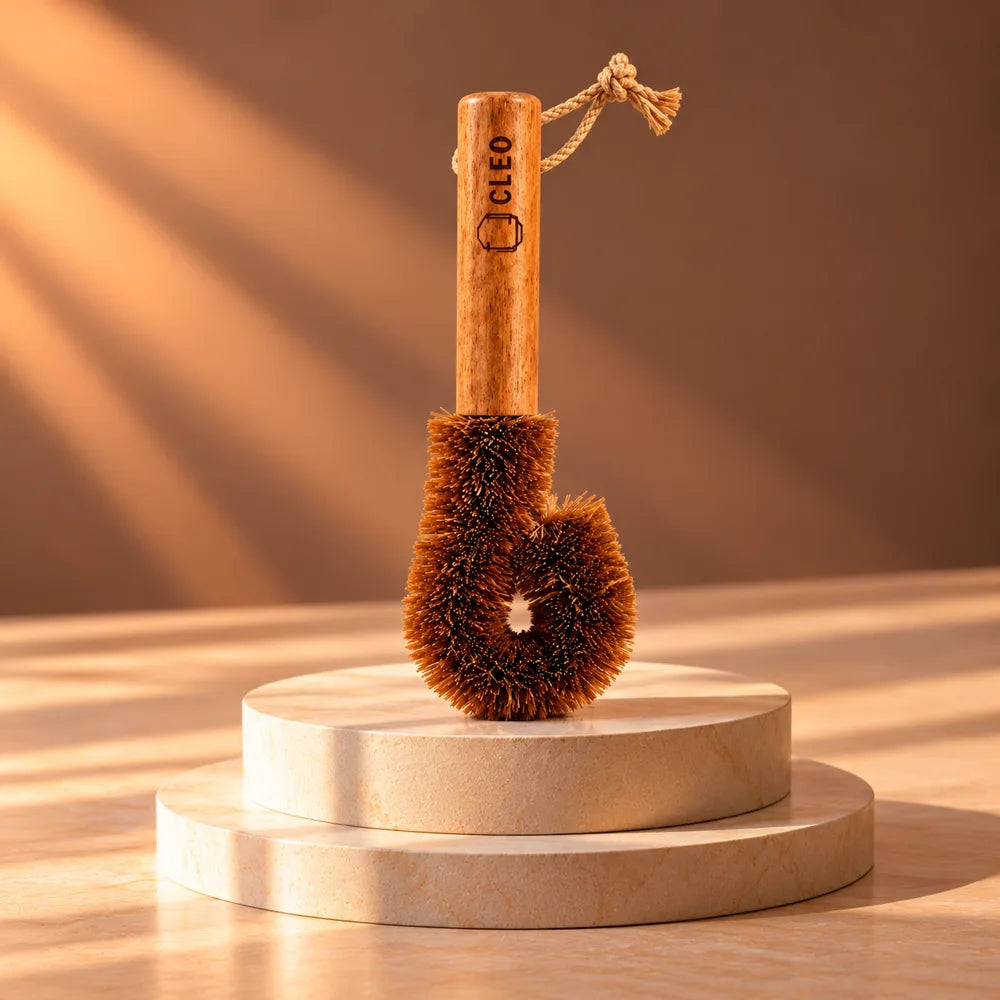
Leave the mixture for a few minutes so it can lift deposits. For stubborn spots, work the Cleo bottle brush around the inside and the neck.
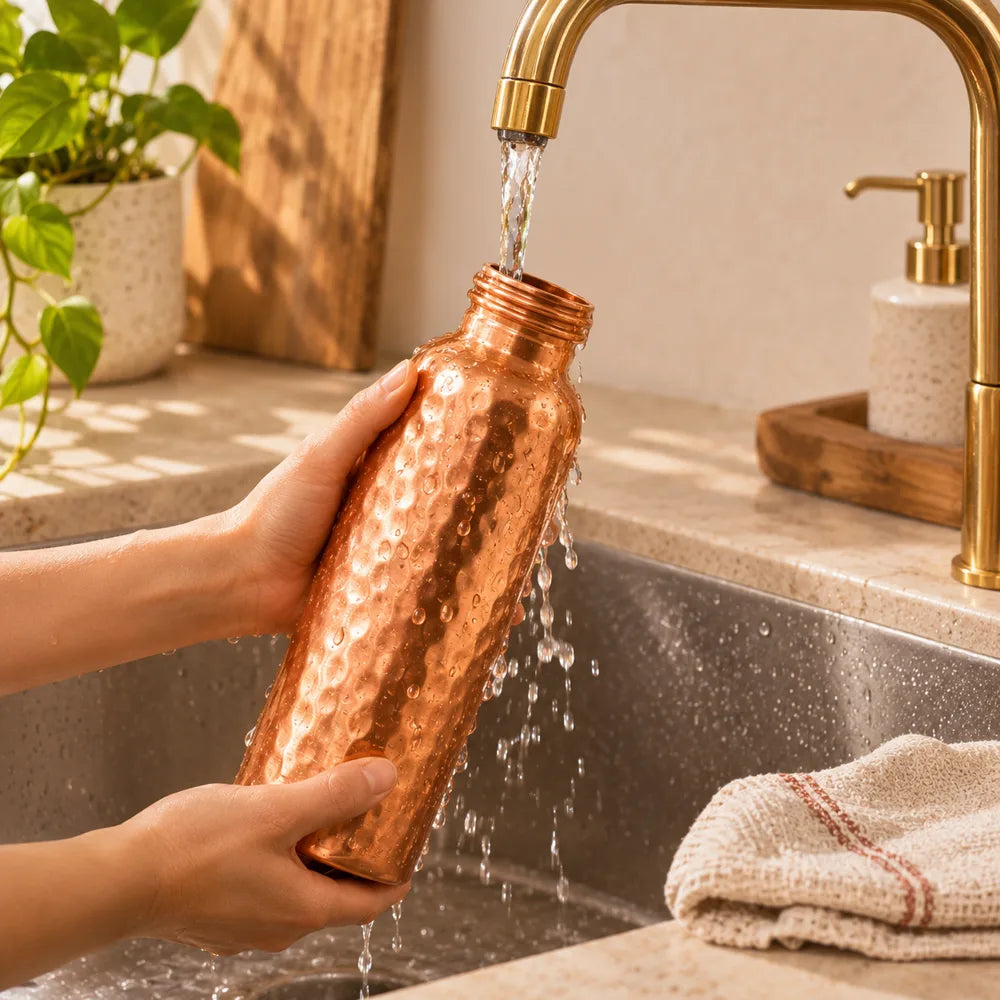
Pour it out and rinse thoroughly with clean water. Dry with a soft cloth.
If you see minor copper build-up around the lid or threads, wipe the inside of the neck with the leftover squeezed lemon half, then follow with a clean cloth.
Natural copper deposits can make the lid feel tight over time. Rub a tiny drop of olive or coconut oil around the threads and ridges at the top of the bottle, then wipe away any excess so it does not touch the drinking surface.
New bottles have a food-grade lacquer on the outside that protects the copper colour. It wears off naturally with use. Do not rub lemon on the exterior while the lacquer is intact.
Once the finish ages and a patina develops, you have two choices:
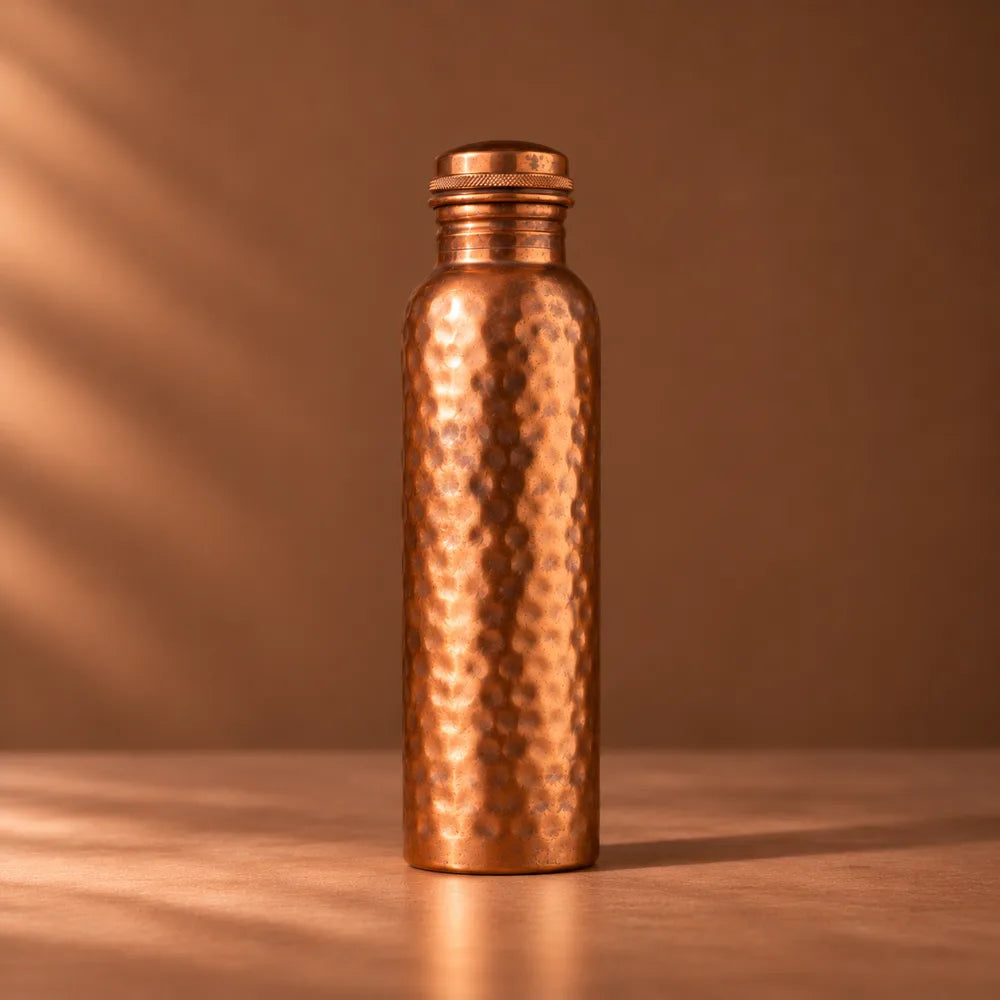
Simply wipe clean with a soft, dry cloth.
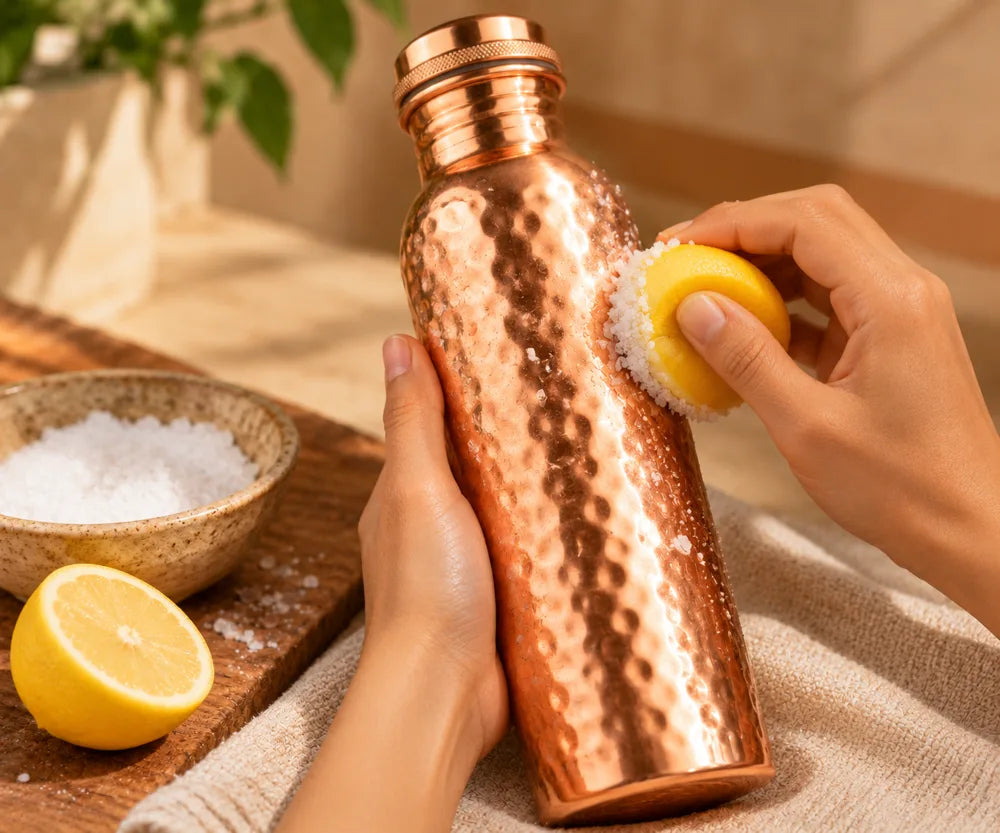
Sprinkle a pinch of fine salt on a fresh lemon slice, rub gently over the exterior, rinse thoroughly and dry with a soft cloth.
Stick to room temperature or cool plain water. Hot liquids conduct heat too quickly and make the bottle uncomfortable to hold. Acidic ingredients like lemon belong in your cleaning routine only, not as a drink stored in the bottle.
Yes. A slight metallic taste is normal, especially after water has rested overnight. Green or dark spots inside are natural oxidation and clean off easily with the lemon and salt method above.
Give the inside a thorough clean once a week with lemon, salt and warm water to prevent mineral and copper build-up.
No. Dishwashers and strong detergents can damage copper and strip its finish. Always hand clean using the gentle method in this guide.
Apply a tiny drop of olive or coconut oil to the threads and ridges at the top of the bottle and wipe off the excess. Regular weekly cleaning also prevents deposits from building up.
Traditional use of copper drinkware is part of Ayurvedic practice. Cleo Lifestyle copper bottles are drinkware, not medical products, and this guide is not medical advice. If you have a medical condition or concerns about copper intake, speak to your doctor.